Keep Wedding Guests Engaged Between the Ceremony and Reception
Why the Gap Between Events Matters
A wedding day usually has natural pauses: the ceremony ends, formal portraits are taken, and then guests wait for the reception to start. That gap can stretch from thirty minutes to two hours. Without a plan, guests wander, check their phones, or leave for a drink they did not intend to have. A well-managed lull keeps energy up and makes the whole day feel smooth. The trick is offering something that feels like a natural part of the celebration, not a filler.
Step 1: Set Up a Photo Station Early
The first thing guests see after the ceremony sets the tone. A photo station, staffed and ready, gives people an immediate reason to gather. A mitzvah photo booth works especially well here because it is built for groups of all ages. Guests who do not know each other can share a frame, and families can grab a quick picture before the formal portraits begin. Position the station near the cocktail hour or in a hallway where foot traffic flows naturally. Watch that the line does not block servers or doorways; a simple rope or sign helps people queue without confusion.
Step 2: Offer a Mix of Print and Digital Options
Not every guest wants a physical keepsake, and not everyone wants to post online. A good setup gives both. Print layouts let people take home a strip or a small card right away. That instant gratification keeps the line moving and gives guests something to hold while they chat. At the same time, digital sharing lets the couple collect every photo in one place. Many guests will share directly to social media or a private album, which spreads the joy to friends who could not attend. Watch that the print volume matches the crowd size; a long wait for prints can kill the momentum. Staff who manage the queue and help with props keep things running fast.

Step 3: Use a Custom Overlay to Tie the Day Together
A custom overlay is the small detail that makes the photo feel like part of the wedding, not a generic snapshot. The overlay can include the couple's names, the date, or a short message like "Thank you for celebrating with us." For a mitzvah photo booth, the overlay often includes Hebrew text or a symbol that matches the theme. This does more than look nice: it turns every picture into a memento that guests will keep. Watch that the overlay is not too busy. A clean design with one or two elements reads better than a cluttered frame. Test the overlay on a sample photo before the event to see how it looks on different skin tones and backgrounds.
Step 4: Turn Photos Into a Guest Book
A guest book that collects photo strips and handwritten notes is one of the most personal keepsakes a couple can take home. Set up a table near the photo station with a blank book, glue sticks, and pens. Guests paste in their strip and write a quick message. This activity fills the gap naturally: people browse the book as it fills, read what others wrote, and add their own. Watch that the book is placed on a stable surface and that someone periodically checks the glue supply. A full guest book by the end of the night is a sign that the station was well used.
Step 5: Keep the Energy With Props and Themes
Props are the easiest way to get shy guests involved. Hats, glasses, signs, and themed items work for all ages. For a wedding, avoid props that require a lot of explanation. Simple, recognizable items get the best reaction. A mitzvah photo booth often includes props that reference the couple's hobbies or cultural background. Watch that props are cleaned between uses, especially during cold and flu season. A small basket for used props and a separate basket for clean ones keeps things sanitary without a lot of fuss.
Step 6: Coordinate the Timeline With the Photo Station
The photo station should not compete with the main events. Open it right after the ceremony, during cocktail hour, and then close it briefly during toasts and dinner. Reopen it after the first dance or during the open dance floor. This gives guests multiple chances to visit without missing key moments. Watch that the station closes on time for dinner; guests who linger at the photo booth can delay the meal service. A staff member who announces the last call for photos before dinner helps everyone wrap up.
Step 7: Encourage Guest Participation Across Ages
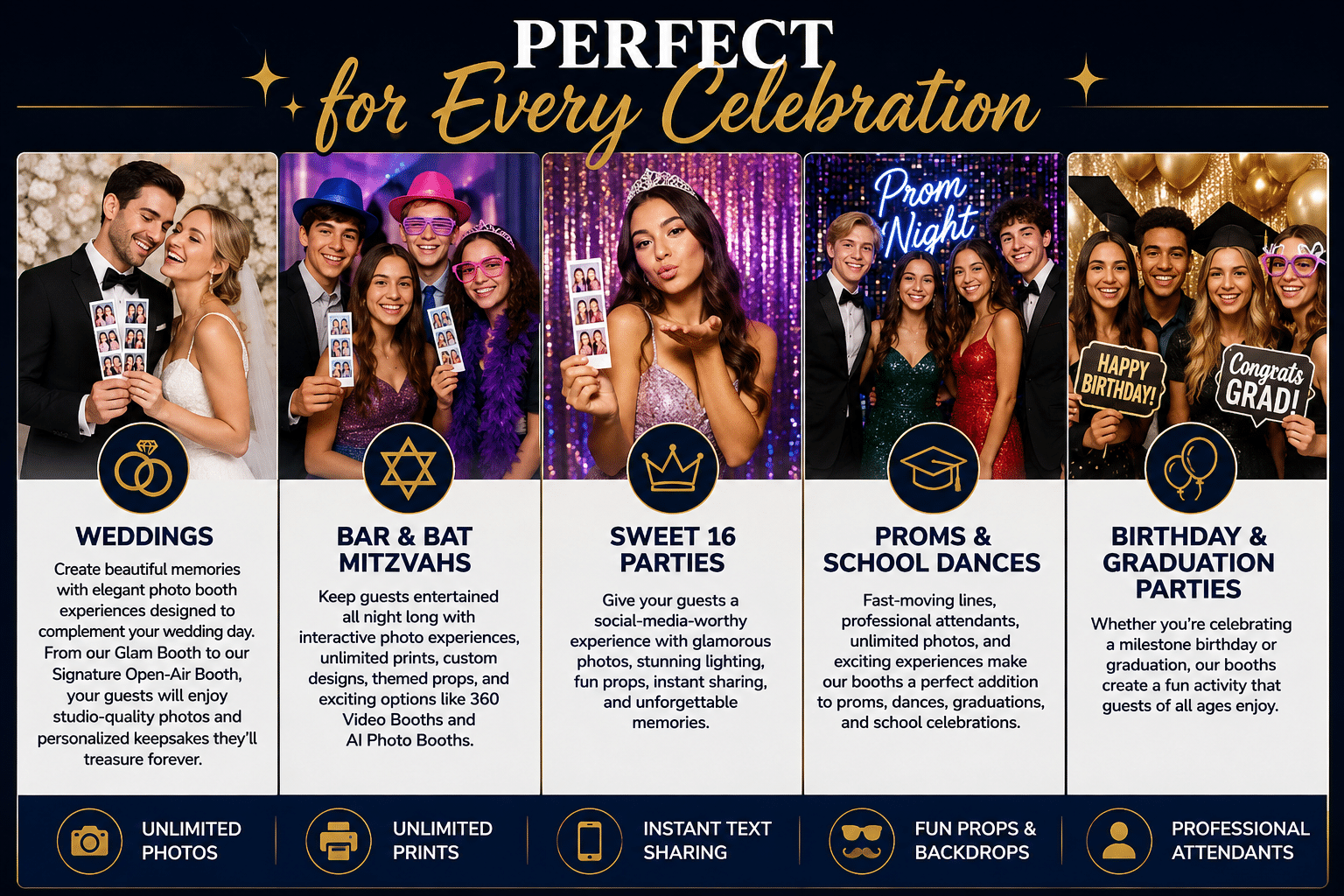
Weddings bring together grandparents, toddlers, and everyone in between. A photo station that works for all ages needs props and setups that suit different heights and mobility levels. A low table with props works for kids. A standing backdrop with a step stool lets shorter guests be seen. Older guests may prefer a simple seated pose. Watch that the station is not too loud or flashy for guests with sensory sensitivities. A dimmer switch on the lights or a quieter prop option keeps the space comfortable for everyone. The goal is photo fun for milestone parties, not a sensory overload that sends guests away.
Step 8: Use Digital Sharing to Build Momentum
Digital sharing does more than let guests post online. It creates a live feed that the couple can project on a screen during the reception. That loop of guest photos is a conversation starter and keeps the energy high. Watch that the projection does not replace the couple's own slideshow or interrupt the formal program. A short loop during cocktail hour or right before the first dance works best. Make sure guests know how to share: a simple sign with instructions near the station helps.
Step 9: Plan for the End of the Night
As the reception winds down, the photo station becomes a last stop for guests who want one more memory. Keep the station open until thirty minutes before the end of the event. This gives guests a chance to grab a final keepsake and say goodbye. Watch that the staff pack up quietly and do not interrupt the last dance or the couple's exit. A clean, organized takedown lets the couple leave without worrying about equipment left behind.
Step 10: Review the Keepsakes After the Wedding
After the event, the couple should collect the digital files and the guest book. These items are the payoff for all the planning. Look through the digital album first: it shows which guests had the most fun and which moments the couple might have missed. The guest book is a physical reminder of who was there and what they said. Watch that the digital files are backed up in two places before you delete anything from the booth. A lost memory card is a sad end to a well-run station.

A wedding day is full of small moments that add up to a big memory. The gap between events does not have to be dead time. With a thoughtful setup, that gap becomes a highlight. A mitzvah photo booth, when placed and managed well, turns waiting into photo fun for milestone parties. Guests leave with a picture, a memory, and a smile. The couple gets a collection of genuine, unposed moments that no formal portrait can capture. That is the real win.